EPLAN

CustomPropertyEditor

Heute gibts mal wieder ein Schmankerl. Gleich am Anfang vielen Dank an Birdo für die Bereitstellung.

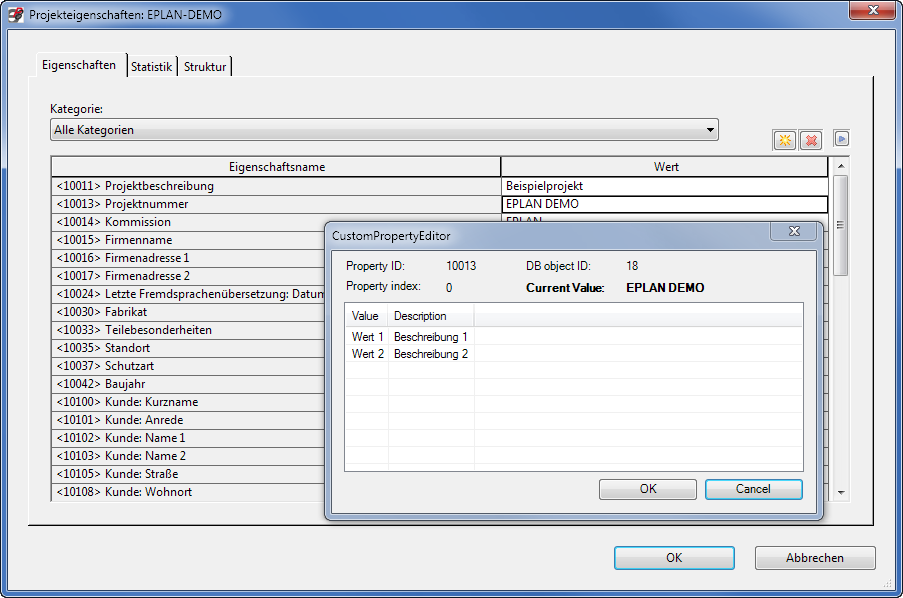
Die versteckte Action RegisterCustomPropertyEditorAction welche nicht dokumentiert ist, kann uns das Leben leichter machen. Mit Hilfe dieser Action könnt ihr eigene Auswahldialoge für Projekteigenschaften erstellen.

CustomPropertyEditor

Birdo hat das ganze auch offen gehalten, um dynamisch über eine INI-Datei, diese für einzelne Property-Ids zu setzen.

Einfach die INI-Dateien mit dem Schema PropertyId.Index.Schreibgeschütz.txt erstellen. Der Inhalt ist Tab-getrennt Value[TAB]Description.

CustomPropertyEditor (6945 Downloads )


using System.IO;
using System.Linq;
using System.Windows.Forms;
using Eplan.EplApi.ApplicationFramework;
using Eplan.EplApi.Base;
using Eplan.EplApi.Scripting;

public class CustomPropertyEditor : System.Windows.Forms.Form
{
    public string PathIni = @"C:\Test\CustomPropertyEditor\";

    public static CustomPropertyEditor frm = new CustomPropertyEditor();
    public static string ValueNew = string.Empty;

    // Setup on startup EPLAN
    [DeclareEventHandler("onMainStart")]
    public void Startup()
    {
        RegisterCustomPropertyEditor();
    }

    [DeclareRegister]
    public void RegisterCustomPropertyEditor()
    {
        LoadScript("true");
    }

    [DeclareUnregister]
    public void UnregisterCustomPropertyEditor()
    {
        LoadScript("false");
    }

    private void LoadScript(string register)
    {
        foreach (string FullFilename in Directory.GetFiles(PathIni))
        {
            try
            {
                string Filename = Path.GetFileNameWithoutExtension(FullFilename);
                if (Filename != null)
                {
                    string[] parameters = Filename.Split('.');

                    Eplan.EplApi.ApplicationFramework.ActionCallingContext acc =
                        new Eplan.EplApi.ApplicationFramework.ActionCallingContext();
                    acc.AddParameter("Register", register);
                    acc.AddParameter("Action", "CustomPropertyEditor");
                    acc.AddParameter("PropertyId", parameters[0]);
                    acc.AddParameter("PropertyIndex", parameters[1]);
                    acc.AddParameter("Editable", parameters[2]);
                    new CommandLineInterpreter().Execute("RegisterCustomPropertyEditorAction", acc);

                    BaseExceptionMessage("RegisterCustomPropertyEditorAction: " +
                                         "PropertyId:" + parameters[0] +
                                         " PropertyIndex:" + parameters[1] +
                                         " Editable:" + parameters[2]);
                }
            }
            catch (System.Exception ex)
            {
                BaseExceptionError("RegisterCustomPropertyEditorAction: " + ex.Message);
            }
        }
    }

    [DeclareAction("CustomPropertyEditor")]
    public void Function(int PropertyId, int PropertyIndex, int DbObjectId, ref string Value, out int DialogModalResult, out string DialogModified)
    {
        // form     
        frm.lblPropertyId.Text = PropertyId.ToString();
        frm.lblPropertyIndex.Text = PropertyIndex.ToString();
        frm.lblDbObjectId.Text = DbObjectId.ToString();
        frm.lblCurrentValue.Text = Value;
        frm.ShowDialog();

        // values
        DialogModified = "1";

        if (frm.DialogResult == DialogResult.OK)
        {
            DialogModalResult = 1;
            Value = ValueNew;
        }
        else
        {
            DialogModalResult = 0;
        }
    }

    private static void BaseExceptionMessage(string message)
    {
        Eplan.EplApi.Base.BaseException bexMessage = new BaseException(message, MessageLevel.Message);
        bexMessage.FixMessage();
    }

    private static void BaseExceptionError(string error)
    {
        Eplan.EplApi.Base.BaseException bexMessage = new BaseException(error, MessageLevel.Error);
        bexMessage.FixMessage();
    }

    private void CustomPropertyEditor_Load(object sender, System.EventArgs e)
    {
        // Search for INI-File
        string FileIni = string.Empty;
        foreach (string file in Directory.GetFiles(PathIni).Where(file => file.StartsWith(PathIni + lblPropertyId.Text + "." + lblPropertyIndex.Text)))
        {
            FileIni = file;
            break;
        }

        // Listview
        if (File.Exists(FileIni))
        {
            livi.Items.Clear();
            string[] lines = File.ReadAllLines(FileIni, Encoding.UTF8);
            foreach (string line in lines)
            {
                string[] items = line.Split('\t');
                ListViewItem item = new ListViewItem(items[0]);
                item.SubItems.Add(items[1]);
                livi.Items.Add(item);
            }
            livi.Sorting = SortOrder.Ascending;
            livi.Sort();
            livi.AutoResizeColumns(ColumnHeaderAutoResizeStyle.ColumnContent);
        }
        else
        {
            MessageBox.Show("INI-File not found:\n" + FileIni, "Error", MessageBoxButtons.OK, MessageBoxIcon.Error);
        }
    }

    private void btnCancel_Click(object sender, System.EventArgs e)
    {
        this.Close();
    }

    private void btnOk_Click(object sender, System.EventArgs e)
    {
        Ok();
    }

    private void Ok()
    {        
        try
        {
            ValueNew = livi.SelectedItems[0].SubItems[0].Text;
            this.DialogResult = DialogResult.OK;
            this.Close();
        }
        catch (System.Exception)
        {
            MessageBox.Show("No value selected", "Warning", MessageBoxButtons.OK, MessageBoxIcon.Warning);
        }

    }

    private void livi_DoubleClick(object sender, System.EventArgs e)
    {
        Ok();
    }

}
Von |2017-11-09T12:23:44+01:002013-08-06|EPLAN, EPLAN-Scripts|

SetStepWidth

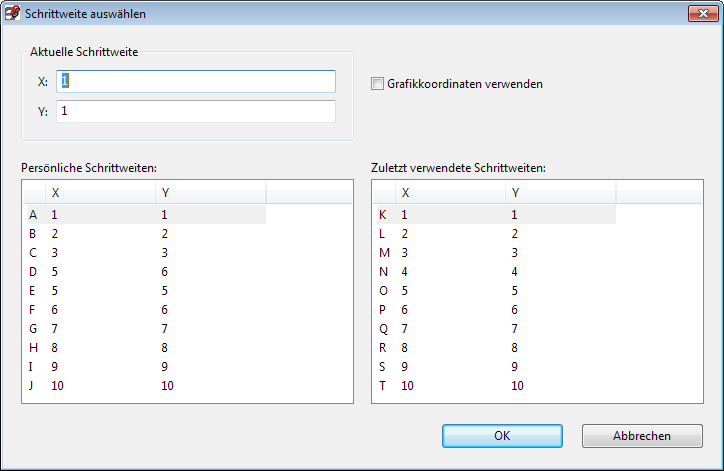
Leider hat EPLAN in der Version 2.2 die Auswahl der Schrittweite (Tastenkürzel “S” im Grafikeditor) geändert.

04-06-2013

Mit Hilfe dieser Settings kann man das ganze aber noch per Script steuern:

LogicPage (double):
USER.GedViewer.Cursor.LogicPage.StepWidth.XCurrent
USER.GedViewer.Cursor.LogicPage.StepWidth.YCurrent

GraphicPage (double):
USER.GedViewer.Cursor.GraphicPage.StepWidth.XCurrent
USER.GedViewer.Cursor.GraphicPage.StepWidth.YCurrent

Use GraphicCoordinates (bool):
USER.GedViewer.Cursor.UseGraphicCoordinatesForStepWidth
Von |2017-11-09T12:23:44+01:002013-06-18|EPLAN, EPLAN-Scripts|

UpgradeProjects

Es gibt mal wieder eine versteckte Action welche sehr nützlich ist.
Mit der Action XprjActionUpgradeProjects können Projekt aus älteren Versionen in die aktuelle Version gehoben werden.

Folgende Parameter stehen zur Verfügung:

  • Project: Vollständiger Projektname (*.elk)
  • Folder: Ordner und Unterordner werden auf Projektdateien durchsucht
  • Archive: 0=Archive werden nicht berücksichtigt / 1=ZW1-Projekte werden auch aktualisiert

Beispielaufruf:

CommandLineInterpreter oCli = new CommandLineInterpreter();
ActionCallingContext acc = new ActionCallingContext();
acc.AddParameter("Folder", @"C:\Test");
acc.AddParameter("Archive", "1"); // Archive included
oCli.Execute("XprjActionUpgradeProjects", acc);
Von |2017-11-09T12:23:45+01:002013-05-29|EPLAN, EPLAN-Scripts|
Nach oben